Mexico Digitised the Sending of Remittances. Half the Money Still Leaves as Cash.
The sending of remittances is solved. The receiving of them is not, and it belongs to nobody.
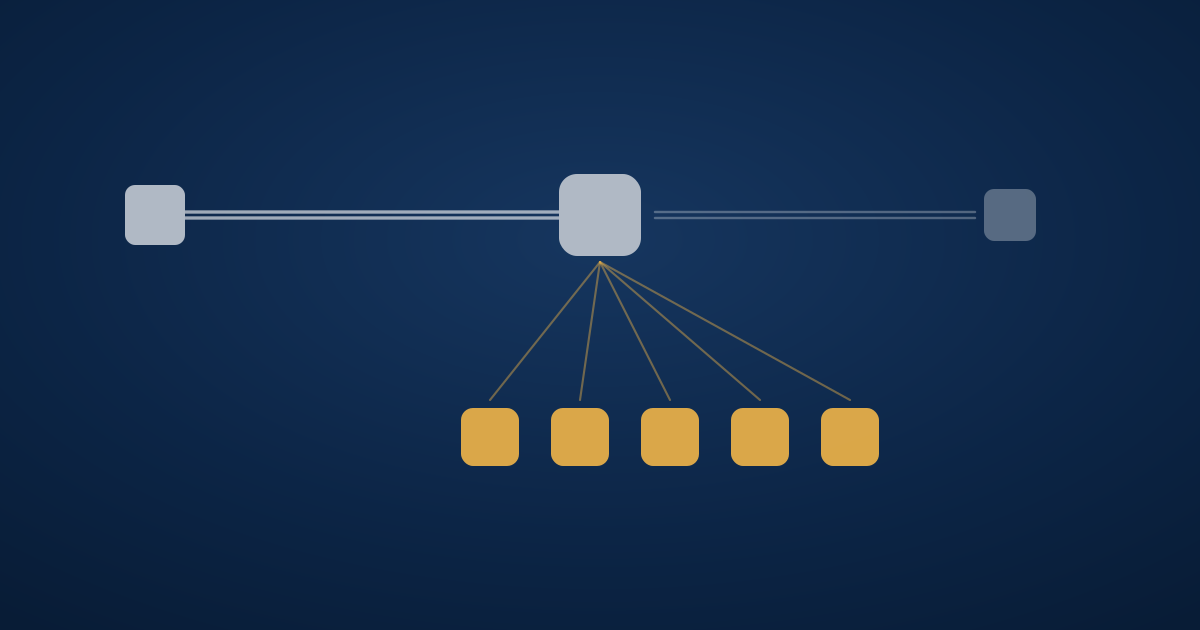
99.2% of the money arrives electronically. Then $21.7 billion of it walks out at a counter. The rail exists; the reason to stay on it does not.
Banxico published September's remittance figures on 3 November, and the number everybody reported is the one that has stopped being interesting.
99.2% of remittances to Mexico now arrive by electronic transfer. In the first nine months of 2026 that is US$46,773 million of the US$47,164 million total. Cash and in-kind accounted for 0.6%, money orders for 0.2%.
That is a finished project. Digitising the sending of remittances was a genuine, hard, multi-decade piece of work, and it is done. There is no meaningful rounding left in it.
Now the number almost nobody reported, from the same release.
Of the money that arrived electronically in those nine months, 46.4% was collected in cash. US$21,685 million. The remaining 53.6%, US$25,089 million, was deposited into an account.
Twenty-one point seven billion dollars travelled through the financial system at the speed of a message and left it at a window.
Why that gap is the whole story
The rail is built and the rail is used. What is missing is any reason to stay on it once the money arrives.
That distinction matters because of what the two outcomes produce.
A remittance collected in cash is a transaction. It is complete when the money is handed over, it leaves no record, and the institution that paid it out has a counter, a queue and a fee. Nothing accumulates.
A remittance that stays in an account is something else. It becomes a balance, which becomes a history, which is the only raw material from which a household with no formal credit file can eventually be offered credit. It becomes a float the institution can intermediate. It becomes a relationship rather than an errand.
So the sector has spent twenty years and enormous effort making the money arrive faster and cheaper, and the money arrives faster and cheaper, and then nearly half of it is converted back into the instrument we were trying to replace, on the day it lands.
The rest of September's data makes the household picture sharper. The average remittance rose to US$426 from US$412 in August, while the number of transfers fell to 12.5 million from 13.2 million. Fewer, larger transfers. The total still grew, but only 1.62% year on year — US$5,362 million against US$5,214 million in September 2025 — and the nine-month figure is up 2.1%, which in dollar terms is close to flat once you think about prices.
People are not being irrational
The usual explanation for the cash-out rate is financial education. Families do not understand the benefits of keeping money in an account, so they take it out.
I think that explanation is condescending and mostly wrong, and I would like to argue against it from the acceptance side, which is where I actually work.
Put yourself in the receiving household. The money arrives on a Tuesday. By Friday it has to pay for: the corner shop, the market stall, the school contribution, the bus, the person who fixes the roof, the gas delivery. Ask how many of those accept a card or a transfer.
In a great many neighbourhoods across this region, the honest answer is one or two of them, on a good day.
So the recipient faces a simple question: do I withdraw it now, in one trip, at a window where it costs nothing — or do I keep it in an account and then make five separate trips to an ATM over the week, paying a fee or finding a machine that has cash, so that I can do exactly the same thing in instalments?
Taking it out in one go is not a failure to understand banking. It is the correct answer to the question the household is actually facing.
Add the second-order reasons, which are also rational. An account with a minimum balance, or a maintenance fee, or a history of a charge the holder did not expect, is not a safe place to keep money you need this week. And for an undocumented or informally employed household, visibility itself can feel like a cost.
None of that is solved by explaining compound interest.
The last mile is an acceptance problem
Here is the reframing I would argue for, and it has a practical consequence.
The cash-out rate is not a remittance problem. It cannot be fixed from the remittance side, because the remittance side has already done everything it can — it delivers the money instantly, electronically, into an account, at low cost. That work is complete and the number proves it.
The cash-out rate is an acceptance problem. Money stays digital only if it can be spent digitally in the places the household actually spends it. Every percentage point of that 46.4% is, at bottom, a merchant in a neighbourhood who takes only cash.
This matters because it tells you where the next dollar of effort should go, and it is not where the sector has been putting it. The industry has spent years on cheaper corridors, faster settlement, better apps and now stablecoin rails. All useful. None of it touches the reason the money leaves.
What touches it is the unglamorous work: putting acceptance into the corner shop, the market stall, the motorcycle repair, the woman selling food at the school gate. SoftPOS on a phone the merchant already owns. QR that settles immediately and visibly. Onboarding that does not require a formal business.
And it has to come with the things a small merchant actually fears, because hardware cost was never the only barrier. Immediate and visible settlement, so the seller does not wonder where the money is. Default limits and alerts. A real channel to call when something goes wrong. A merchant who believes a fake QR or a chargeback could erase a day's takings goes back to cash, and will be right to.
I have written before about the Honduran and Salvadoran data on this — small merchants halting digital payment adoption out of fear of fraud, not because of terminal cost. Put that next to this 46.4% and they are the same problem seen from the two ends. The household cashes out because the merchant does not accept. The merchant does not accept because nobody made it safe. Both are rational; together they are a trap.
What a stayed remittance is worth
It is worth being concrete about why an institution should care beyond the float, because the float argument alone has never been enough to get this funded.
A household receiving US$426 a month, every month, for years, has one of the most predictable income streams in any portfolio. More predictable than a salaried worker who can be laid off. The problem has never been that these households are bad risks. The problem is that the money arrives and disappears, so there is no record, and without a record there is no file, and without a file there is no credit.
A remittance that lands in an account and stays there for even two weeks generates exactly the history that makes a lending decision possible. Nine months of that is a portfolio.
So the institution that solves the last mile is not just capturing deposits. It is manufacturing credit files for a population that has been structurally excluded from them — not through a social programme, but as a by-product of making the money usable where it lands.
That is a better business case than float, and I do not think it is made often enough in the rooms where this gets budgeted.
From a Panamá desk
Panamá is not Mexico on this, and the difference is instructive rather than comforting.
We are a dollarized economy, so the arriving remittance needs no conversion and carries no exchange-rate cost — the single largest friction in most corridors simply does not exist here. We are also, by regional standards, a well-banked market with dense card acceptance in the capital.
And yet the same structure appears the moment you leave the places with acceptance. A household in a smaller town or an informal settlement faces the identical question: can I spend this where I shop, or do I have to take it out? Dollarization removes the currency friction and does nothing at all about the acceptance friction, which is the one that actually determines whether the money stays.
That is worth stating plainly, because dollarization is often discussed here as though it solved more than it did. It solved a conversion problem. The last mile is not a conversion problem.
The other regional point is about where this sits in a bank's org chart, and it is the reason the problem persists.
Remittances usually belong to one area. Merchant acquiring belongs to another. Deposits and lending belong to a third. The 46.4% is a number that only becomes visible if somebody holds all three at once, and in most institutions nobody does. The remittance team hits its targets. The acquiring team hits its targets. The money still leaves, and no single team is failing.
If I were setting one objective across those three areas, it would be this: what share of remittances received through us is still with us at day fourteen? Not a target for a product line — a number that forces the three to talk to each other.
My judgment
The sending of remittances is solved and we should stop congratulating ourselves for it. 99.2% is a ceiling, not a trend.
The receiving of remittances is not solved and is barely being worked on, because it does not belong to anybody in particular and because it requires the least glamorous work in payments — putting acceptance into small, informal, cash-preferring merchants one at a time.
And the economics are better than they look. Nearly half of a forty-seven-billion-dollar annual flow leaves the system within days. The institution that keeps even a fraction of that on deposit for two weeks gets both the balances and the credit files, and the second is worth more than the first.
What I would not do is treat this as a financial education problem. The households are reading their situation correctly. They will keep money in an account when there is somewhere to spend it from, and not before. Everything else we do is upstream of a question that gets answered at a market stall.
Three questions for the people who own this
1. Of the remittances your institution pays out, what share is still on deposit at day fourteen? If nobody owns that number, remittances and deposits are two separate successes and the money is still leaving.
2. In the three neighbourhoods where most of your remittance recipients live, how many merchants accept a digital payment? Not nationally — those three. Has anyone counted?
3. If the answer to the first question is low, is that a problem assigned to the remittance team, the acquiring team, or nobody? If the answer is nobody, that is the finding.
Reply to this email with a line or two. The sharpest answers will shape the next issue.
Sources
Banco de México, 3 November 2026, as reported by Pulso de San Luis — September 2026 remittances of US$5,362 million, up 1.62% from US$5,214 million in September 2025; 12.5 million transfers, down from 13.2 million in August; an average remittance of US$426, up from US$412 in August; an average cash and in-kind remittance of US$398, down from US$458 in August; January to September cumulative of US$47,164 million against US$46,184 million in the same period of 2025, a 2.1% increase; electronic transfers at 99.2% of the total, or US$46,773 million, with cash and in-kind at 0.6% (US$303 million) and money orders at 0.2% (US$87 million); and, of electronic transfers in the nine-month period, 46.4% collected in cash (US$21,685 million) against 53.6% deposited into an account (US$25,089 million). Link
Every figure above is Banxico's as reported in that account. I worked from the secondary report rather than the original Banxico release.
A note on what I left out. Some coverage of the same day's Banxico data cites a user figure for Dimo, the phone-number transfer scheme, as a contrast with the remittance picture. I could not confirm that figure, so the comparison does not appear above. The argument that the last mile is an acceptance problem rather than a remittance problem is mine, and Banxico makes no such claim.