Five Banks Locked Agents Out of the App. Their Card Rails Are Still Open.
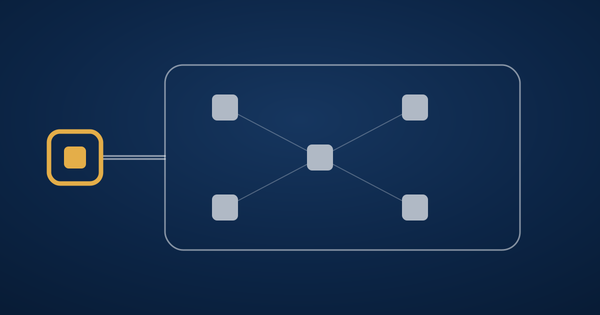
Banks can lock agents out of the app. They cannot lock them out of the card rail.
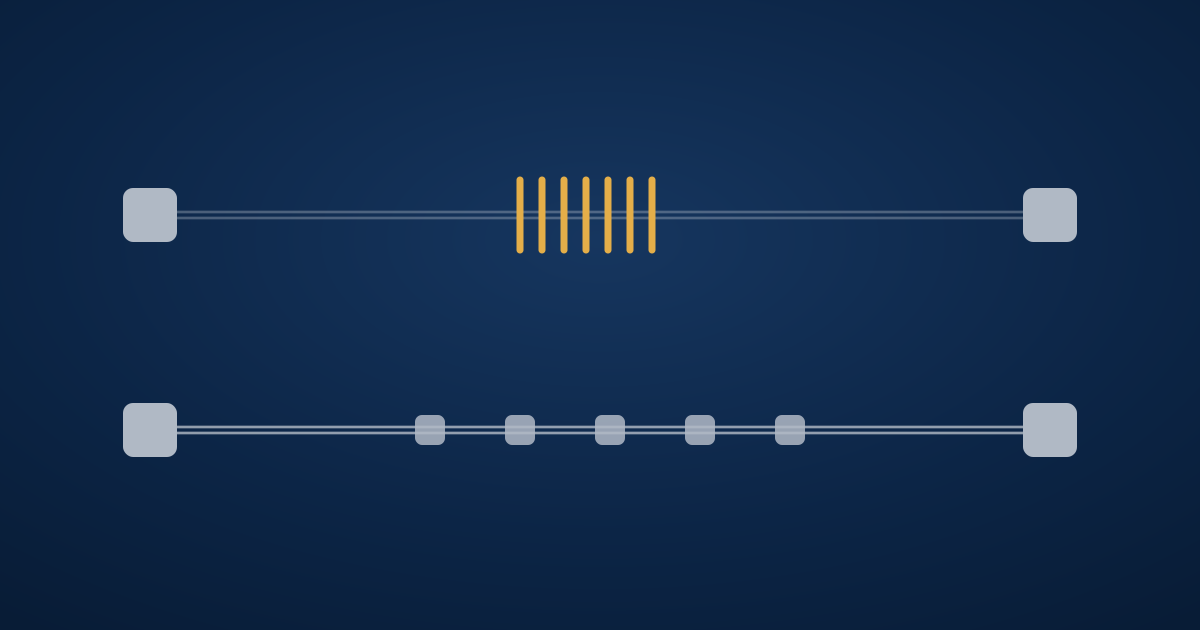
The ban covers one channel. Agent-initiated spending arrives through a different door, under a rulebook the bank does not write.
Five British banks have moved to block AI agents from customer accounts. HSBC, Nationwide, NatWest, Barclays and Lloyds, with bans in some cases on an agent transacting without the customer's direct involvement. Citigroup, Bank of America, Wells Fargo and JPMorgan have reportedly done the same. Charles Schwab says it blocks ten to twenty clients a week from using them.
The coverage has framed this as banks being frightened of AI. I think that framing misses what is actually interesting, which is a contradiction sitting in plain sight.
Every one of those banks is a card issuer.
And for the past eighteen months, the card networks those banks belong to have been building, announcing and shipping infrastructure whose entire purpose is to let AI agents spend money on those same customers' cards. Agentic tokens. Intelligent Commerce. Agent registration. Intent data. Acceptance frameworks designed so that an agent purchase passes through a merchant checkout without the merchant changing anything.
So a bank can lock an agent out of its mobile app on Monday and, on Tuesday, authorize a card transaction initiated by an agent at a merchant three thousand miles away — because that traffic arrives through a completely different door, governed by a rulebook the bank did not write and cannot unilaterally change.
The front door is bolted. The card rail is wide open. And the bank has considerably less visibility into the second than the first.
That is not hypocrisy. It is structural, and it is worth understanding precisely, because the same structure exists in every bank reading this — including mine, and including yours.
Two doors, two rulebooks
When a bank blocks an agent from an account, it is exercising a power it genuinely holds. Its app, its API, its terms of service, its authentication. The bank decides who gets in. A unilateral decision, enforceable immediately, and entirely within its authority.
Card acceptance works nothing like that.
When an authorization request arrives, the bank is operating inside a scheme it joined, under rules it participates in but does not control, with obligations about what it may decline and on what basis. An issuer that decided to systematically refuse a category of properly formed, properly authenticated transactions would be having a conversation with its network very quickly.
The asymmetry is the whole story. On the channel the bank controls, it can ban agents outright. On the channel where agent spending is actually being engineered to happen, it has a vote in a committee and a rulebook it shares with thousands of other members.
And the agentic payment work of the last eighteen months has been concentrated — deliberately, and sensibly — on the second channel. That is where the money is, that is where the merchants are, and that is where the networks have the authority to make something work.
So the bans are real, they are defensible, and they cover the smaller half of the problem.
Four reasons that do not belong in the same sentence
The reasons attributed to the banks are worth separating, because they have been bundled, and bundling them is going to cost the industry something.
That agents could mismanage customers' money. Legitimate, and the Visa benchmark published a week earlier put numbers on it: agents failed 42.8% of shopping runs, and in roughly 54% of those failures they completed a purchase anyway. This is not speculative. It is measured.
That there are no clear rules on who would be liable. This is the strongest argument any bank has, and I have been making it all year. There is no initiation category for an agent transaction, no reason code that says an agent did this under a mandate, and no agreement on whether an agent is the customer's instrument, an independent party, or a referral channel. A bank refusing to accept open-ended liability for a category nobody has defined is behaving correctly.
That large-scale automated account switching could affect bank profits. McKinsey's figure, as reported, is that up to seven hundred billion pounds could move out of low-interest accounts on AI advice, and that shifting five to ten per cent of balances could cut deposit profits by a fifth or more.
That in the severe case it could affect financial stability. The concern being that many agents, optimising independently but on similar logic, withdraw from the same institution at the same time.
Now look at what just happened in that list.
The first two are risk arguments. The fourth is a systemic argument and, I think, an underrated one — correlated automated withdrawal is a genuine liquidity question that deserves serious work, and it is not the same thing as a bank run by text message, because the agents would be acting rationally rather than in panic.
The third is not a risk argument at all. It is a commercial interest. Customers might move their money somewhere that pays them more, and that would reduce our margin.
That may well be true. It is not a reason to deny a customer a tool, and everybody who reads it knows that.
My concern is practical rather than moral. The Financial Conduct Authority is working on rules for AI agents in finance. When that process starts in earnest, the banks will want the liability argument to be taken seriously — and it deserves to be. But it is now standing in public next to an argument about protecting deposit margins, and a regulator reading the four together will discount the first because of the third.
If I were advising on this, I would separate them immediately and never let them appear in the same paragraph again. Make the liability case loudly, to the networks and to the regulator. Make the stability case with actual modelling. And make the margin case honestly, as a commercial concern, in the places where commercial concerns belong — or do not make it at all.
A ban is a position, not a strategy
I want to be fair to the banks here, because I would probably have signed the same memo.
When the realistic alternative is a customer handing their online banking password to a third-party bot, a ban is the right first control. It is fast, it is enforceable, and it buys time. The banks were also pre-emptive about it, which is genuinely unusual for this industry — the reports say there is no sign yet of agents actually accessing accounts. We are normally much later than this.
But it is a holding position, and holding positions have expiry dates set by somebody else.
The expiry date here is customer demand. If people want agents to manage their money, a meaningful number will find a way, and the way they will find is the worst available one: giving credentials to something that logs in pretending to be them. That is strictly worse for the bank than a sanctioned channel, because it is indistinguishable from account takeover, it breaks every behavioural fraud model, and it moves the liability conversation from what did the agent do to why did your authentication let it in.
So the durable answer is a lane, not a wall. Scoped access rather than full account access. Revocable by the customer and by the bank. Read-only first, because most of the value people actually want — tell me what I am spending on, find me a better rate — needs no write access at all. And any action that moves money sitting behind the bank's own strong authentication, every time, with no standing permission to act unattended.
Building that is a project. Banning is a memo. The memo is the right first move and the wrong only move.
From a Panamá desk
This will arrive in our region as a copied policy, and the copy will be missing the thing that makes it work.
In the United Kingdom, a bank that blocks an agent is blocking one route among several. Open banking exists there. There is a regulated, supervised way for a third party to access account data with the customer's consent, and the bank can point at it and say: not through the back, through that door.
In most of this region, there is no that door. Open banking frameworks are immature, partial, or still being drafted. So when a Latin American bank adopts the same ban — and several will, because it is the obvious move and the precedent now exists — the ban is not one option among several. It is the entire policy.
And the alternative the customer reaches for is the one that was already here. Credential sharing is not a future problem in this region. Aggregators, personal finance apps and bill-payment services have been collecting people's banking passwords and logging in as them for years. We know this. We mostly tolerate it because the alternative was to leave the customer with nothing.
An AI agent is that same old problem with a much better interface and far more initiative. Which means the question for a bank here is not whether to allow agents. It is whether the credential sharing that is already happening gets a supervised lane before agents make it ten times more common.
That is an argument for moving faster on open banking than our regulators currently are, and it is an argument a bank can make credibly, because it is asking to be regulated rather than asking to be left alone.
My judgment
The bans are correct and insufficient, and both halves of that matter.
Correct, because the liability position really is undefined, and no institution should accept unbounded exposure to a category that has no rules yet. Insufficient, because the channel being locked is the one the bank controls, while the channel where agentic spending is actually being built runs on rails the bank shares with everyone else and cannot close.
The thing I would watch, and the thing I would ask my own network, is whether an issuer will have a say at all. When agentic tokens arrive in volume, can an issuer decline that traffic as a class? Under what rule? With what consequence? Nobody has published an answer, and the answer determines whether these bans mean anything in two years or whether they were a statement about an app.
And the advice I would give any bank making this argument in public: separate your reasons. The liability case is strong enough to win on its own. Standing it next to a deposit-margin case does not strengthen it. It gives the regulator a reason to discount all four.
Three questions for the people who own this
1. Your institution can block an agent from the app. Can it decline an agent-initiated card transaction as a class — and if it did, what would your network say? Has anyone asked?
2. Of the reasons your institution would give for restricting agents, how many are risk arguments and how many are revenue arguments? If the honest answer includes the second, where is it written down, and would you be comfortable if it were read out at a hearing?
3. How many of your customers have already given their banking credentials to a third-party app or aggregator? If you do not know that number, a ban on AI agents is a policy about a problem you have not measured.
Reply to this email with a line or two. The sharpest answers will shape the next issue.
Sources
The Paypers, 10 November 2026 — five UK banks, HSBC, Nationwide, NatWest, Barclays and Lloyds, reportedly blocking AI agents from customer accounts, including bans on agents transacting without the customer's direct involvement; the pre-emptive nature of the measures; the four stated concerns; comments attributed to Standard Chartered's Manus Costello and Lloyds' Will Chalmers; the Financial Conduct Authority's work with the industry; the McKinsey figures on up to GBP 700 billion of deposits and a fifth or more of deposit profits; and the US precedents at Citigroup, Bank of America, Wells Fargo, JPMorgan and Charles Schwab. Link
Visa, 5 November 2026 — the Agentic Commerce Benchmark figures cited above: a 42.8% failure rate across runs, with roughly 54% of failed runs still ending in a purchase. Link
The original reporting on the UK banks is The Telegraph's; I have worked from the secondary account linked above and have not read the original. The observation that the bans cover the channel the bank controls while agentic spending is being built on the one it does not is mine.