Brazil Did Not Regulate Crypto. It Put It Inside the Foreign Exchange Market.
The US built a new regime for stablecoins. Brazil widened the definition of foreign exchange.
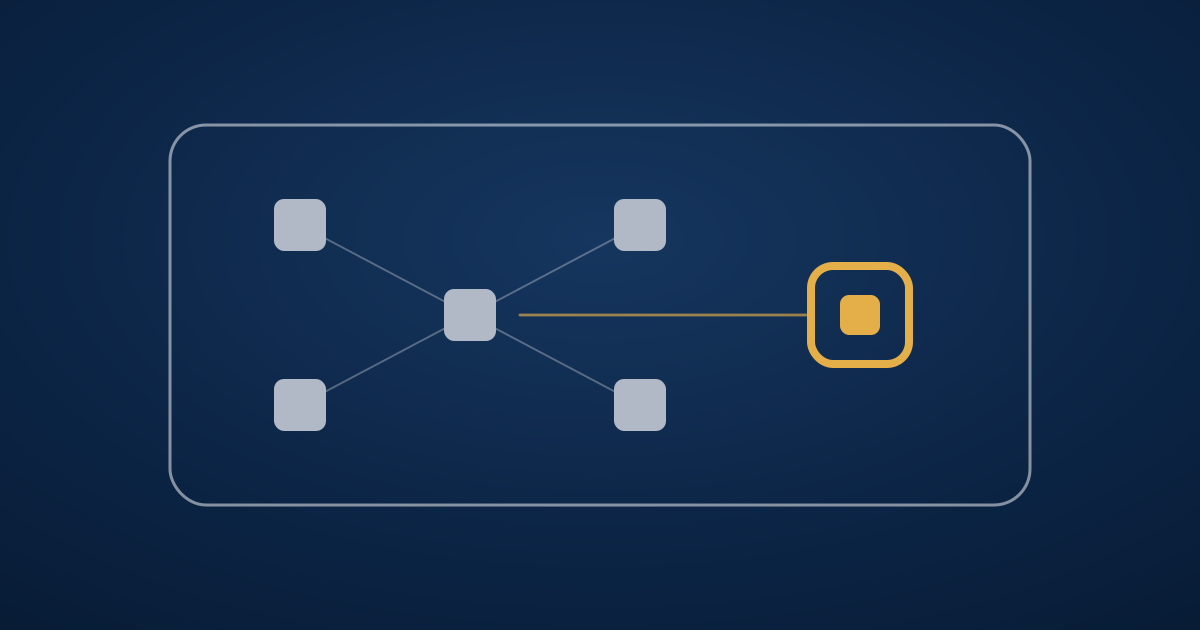
Everyone else is building a new regime. Brazil folded stablecoin flows into machinery that is sixty years old and already works.
On 10 November the Central Bank of Brazil issued three resolutions — 519, 520 and 521 — and almost every account of them has been filed under crypto regulation.
That filing is wrong, and the mistake is worth correcting because it hides the most interesting regulatory decision made in this region all year.
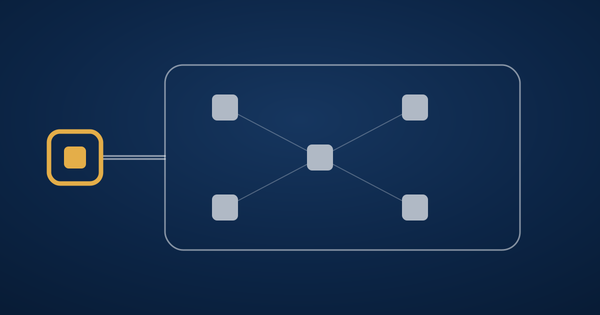
Brazil did not build a crypto regime. It took virtual asset operations that move value across a border and placed them inside the foreign exchange market, amending the existing FX resolutions rather than writing a parallel framework.
Four months ago the United States took the opposite route. The GENIUS Act created a new legal category — the payment stablecoin — with its own issuer licensing, its own reserve rules, its own supervisor and its own enforcement regime, all built from scratch.
Two of the largest economies in the hemisphere have now answered the same question in two incompatible ways, and anybody writing rules in a smaller market is about to have to choose between them. So it is worth understanding what Brazil actually did.
What the three resolutions do
Resolution 519 is the authorisation process. It covers FX brokers, securities brokers and distributors, and the new category of SPSAV — a company authorised by the central bank to provide virtual asset services. Controllers must demonstrate economic and financial capacity and the lawful origin of their funds. The business must be viable. There are requirements for IT structure, governance and the reputation of administrators, and directors in management roles must live in Brazil.
Firms already operating get a two-phase process: first a check that they were operating on the effective date, with good-reputation and minimum capital and equity requirements, and then a review of everything else.
Resolution 520 is how these firms are formed and run, split into three types. Intermediaries buy, sell, swap, manage portfolios, stake and provide FX services. Custodians hold assets and access instruments — and here the rules are strict: segregation of client assets, proof of reserves, independent audit, redundant data, and strict liability for losses. Brokers combine the two, with separation of functions, conflict-of-interest controls and internal controls comparable to a financial institution.
Banks and securities brokers may also provide these services, with ninety days' notice to the central bank and independent technical certification.
Resolution 521 is the one that matters most, and it is the one almost nobody has read. It amends Resolutions 277, 278 and 279 — the existing FX rules — to bring virtual asset operations inside the foreign exchange market. That covers international payments and transfers made with virtual assets, transfers linked to international card or electronic payment obligations, transfers to and from self-custody wallets, and the buying, selling or swapping of virtual assets referenced to fiat currency.
Resolutions 519 and 520 take effect on 2 February 2026. Most of 521 does too, with its reporting rules and purpose codes following on 4 May 2026. Firms already operating have 270 days from the effective date to file for authorisation, and thirty days to wind down if they miss it.
Why putting it in the FX market is the clever part
Think about what Brazil just inherited by making this choice.
Sixty years of foreign exchange machinery already exists. Purpose codes. Reporting obligations. Counterparty requirements. Prudential rules for overseas counterparties. Supervisory expertise. A body of case law and practice about what a cross-border payment is, who may handle one, and what has to be recorded.
None of it had to be invented. Brazil extended an apparatus that already functions instead of standing up a new one, and in doing so it answered a question that has paralysed regulators everywhere: is a stablecoin transfer a payment, an investment, a remittance or a commodity trade?
Brazil's answer is operational rather than philosophical. If value crosses a border, it is foreign exchange. Whatever else the instrument may be, that characteristic governs.
Compare the cost of the two approaches. The GENIUS Act requires new rulemaking by the Treasury, the federal banking agencies and state regulators, tailored standards for capital, liquidity, reserve diversification, interest rate risk and operational risk, a certification committee, and an eighteen-month wait before anything is in force. Brazil amended three existing resolutions and set a date.
I am not arguing the Brazilian approach is better in every respect. It is not trying to do the same thing — the US built a framework for issuing a new instrument, and Brazil built one for moving existing ones across its border. But for a country whose problem is capital flows rather than product industry, folding into FX is faster, cheaper and considerably harder to game.
Three choices worth copying, and one worth arguing about
Read past the structure and there are four specific decisions in these texts that any regulator in this region should look at directly.
The hundred thousand dollar line. International payments or transfers made with virtual assets are capped at US$100,000 when the counterparty is not an FX-authorised institution.
That is not a ban and it is not a free pass. It is a channelling rule. Retail-scale flows may move through non-institutional counterparties; anything above that has to run through a regulated FX institution. It routes the volume that matters into the supervised perimeter without blocking the long tail, which is roughly what you want if your objective is visibility rather than prohibition.
No physical cash. An SPSAV authorised to operate in FX may not handle physical cash in any currency.
One sentence, and it closes the single most exploited seam in this entire asset class. The crypto-to-cash counter, where provenance goes to die, is simply not an authorised activity. I would copy this clause verbatim.
Strict liability for custodians. Segregation, proof of reserves, independent audit, redundant data, and the custodian bears strict liability for losses.
That is stronger than most jurisdictions have managed, and it is the clause that will determine whether institutional money is comfortable. A custodian that carries strict liability has to be capitalised like it means it, which quietly eliminates the undercapitalised end of the market without having to name anyone.
And the one worth arguing about: self-custody. The rules reach transfers to and from self-custody wallets, and the service provider must identify the owner of the self-custody wallet and document how it verified the origin and destination of the assets.
Within the regulated perimeter, that ends anonymous self-custody transfers. It is a real policy choice with real costs — self-custody without permission is the point of the technology for a meaningful set of users, and some of them have good reasons. Brazil decided that a flow crossing its border has to be attributable, full stop.
I think that is defensible for a central bank whose mandate includes capital flow monitoring. I also think it should be argued about openly rather than buried in a technical annex, because it is the clause with the largest effect on how people may actually hold money.
The purpose codes are the real tell
The detail that tells you what Brazil is actually doing is the smallest one in the package: reporting obligations and specific purpose codes, effective 4 May 2026.
Purpose codes are how a central bank classifies why money crossed a border. They are dull, they are administrative, and they are the instrument through which every balance of payments statistic in the world is produced.
Assigning purpose codes to virtual asset flows means Brazil intends to measure them — by volume, by corridor, by reason, monthly, in a dataset that sits beside conventional FX.
And measurement precedes policy. In eighteen months Brazil will know how much value leaves the country in stablecoins, where it goes, and what for. No other country in this region will have that number. When the moment comes to decide whether to permit, restrict or encourage these flows, Brazil will be deciding from data and everybody else will be deciding from anecdote.
That is the part I would steal, and it is almost free. You do not have to know what your policy should be in order to start counting.
From a Mexico City desk
The Brazilian model is the one México should be reading closely, and the reason is that we have spent seven years running the other version of the same decision.
Brazil's problem is that stablecoins let value leave the real without passing through the foreign exchange market. The real is a currency with a central bank that manages it, a capital account that gets monitored, and a policy that depends on knowing what crosses the border. A dollar-referenced token is, from Brasília, an unmonitored exit.
México has exactly that problem, and in a sharper form. We have a floating peso, a central bank whose credibility rests on managing it, and the single most obvious use case for dollar-referenced tokens anywhere in this hemisphere: the remittance corridor. A token that moves value from a worker in Texas to a family in Michoacán without passing through a regulated conversion is not a thought experiment here. It is a product, it has funding, and it is being built now.
Our answer has been a perimeter too, drawn the other way. Since the Ley Fintech of 2018, México has had a legal definition of activos virtuales and an authority that decides which ones regulated institutions may touch. The practical effect of how that authority has been exercised is that virtual assets have been kept outside the regulated financial system rather than brought inside it. I am describing the effect as I have experienced it from inside a regulated institution, not citing a resolution.
Both are perimeter decisions. Brazil's is designed to make the flow visible. Ours has had the effect of making it somebody else's.
I want to be fair about why, because the reasoning is not foolish. A central bank that spent decades building credibility on peso stability has real grounds for caution about an instrument that offers households a frictionless exit into dollars. In a country where dollarization has always been a live political question rather than an academic one, that caution is a judgment about what a monetary authority is for. It is defensible.
But it has a cost, and the cost is precisely what Brazil just bought itself. We do not have the number. Nobody in México can say how much value leaves in stablecoins, through which corridors, for what, or at what rate it is growing. The flows did not stop when the perimeter excluded them. They moved to places the perimeter does not reach. Exclusion is not measurement. It is the absence of measurement with a justification attached.
So the text does not travel, but the mechanism does, and the mechanism is the part worth taking.
The mechanism is: put the new flow inside a supervised perimeter that already exists, rather than building a new one beside it. For Brazil that perimeter was FX. México has an FX reporting apparatus of its own, and a Ley Fintech that already defines the asset class. The pieces are on the table and have been for years. What is missing is the decision to point them at each other — and that instinct, using what exists, is the opposite of what most jurisdictions in this region do, which is draft a standalone crypto law that takes three years and arrives obsolete.
Two specific things I would take from this.
Start counting before deciding. Brazil is building the dataset first. México could require reporting on cross-border settlement in virtual assets without deciding anything else at all — no new licensing regime, no prohibition, no endorsement, no change to what institutions may or may not hold. Just a reporting obligation on regulated institutions. It is cheap, it is uncontroversial, and in two years it is the difference between a policy and a guess. The current position produces neither permission nor data, which is the worst of the available combinations.
Watch the copying. Brazil is large enough to set regional precedent, and smaller markets will lift its text. The hundred-thousand-dollar threshold and the self-custody identification rule will appear in draft legislation in other countries within two years, detached from the FX context that makes them coherent. A threshold calibrated to Brazilian flows — trade, investment, corporate treasury — means something quite different in an economy whose dominant cross-border flow is millions of small remittances. Set at the wrong level, the same rule either catches nothing or criminalises ordinary families.
Good rules travel badly when the structure that justified them stays behind.
My judgment
This is the most sophisticated piece of payments regulation published in this region this year, and it has been almost entirely misread as crypto news.
Its real significance is that it establishes a second model. The United States created a new instrument and built a regime around it. Brazil took an existing market and widened its definition. Both are now live, both are coherent, and every other country in the hemisphere will effectively pick one.
My prediction, offered so it can be checked later: more countries will follow Brazil than the United States, and not because it is better policy. Because folding a flow into an existing supervised market requires a resolution, and creating a new instrument category requires a law. Legislatures are slow and central banks are not, and that asymmetry will decide more of this than anybody's assessment of the merits.
For institutions like mine, the Brazilian model is also the one that puts us in the flow rather than outside it. If the activity is foreign exchange, then the people authorised to do foreign exchange are the natural participants — and that is a licence we already hold and a discipline we already run. Under the American model, a payment stablecoin issuer is a new kind of entity, and a regional bank is at best a distributor of somebody else's product.
That is worth noticing before the choice gets made somewhere above us.
Three questions for the people who own this
1. If your regulator asked tomorrow how much value your institution moves cross-border in virtual assets, could you answer? Not whether you permit it — whether you can measure it. Brazil will be able to in eighteen months.
2. In your market, which existing supervised perimeter is the natural home for these flows — payment system rules, banking licence conditions, the AML regime? If nobody has proposed one, a standalone crypto law is the default, and it will take years.
3. Under the two models now on the table, is your institution a participant or a distributor? The answer differs, and the decision will probably be taken by people who have not asked you.
Reply to this email with a line or two. The sharpest answers will shape the next issue.
Sources
Lefosse Advogados, alert on Resolutions BCB 519, 520 and 521 of 10 November 2025 — the SPSAV authorisation regime under Resolution 519, including controller requirements, the two-phase process for firms already operating and grounds for cancellation; the three service types under Resolution 520, with custodian obligations of segregation, proof of reserves, independent audit, redundant data and strict liability for losses, and the ninety-day notice and independent technical certification for banks and securities brokers; Resolution 521's amendment of Resolutions 277, 278 and 279 to bring virtual asset operations into the FX market, covering international payments and transfers, transfers tied to international card obligations, transfers to and from self-custody wallets with an obligation to identify the owner, and operations in virtual assets referenced to fiat currency; the prohibition on handling physical cash; the US$100,000 cap on international payments or transfers where the counterparty is not an FX-authorised institution; effective dates of 2 February 2026 for Resolutions 519 and 520 and for most of 521, with reporting rules and purpose codes from 4 May 2026; and the 270-day filing window with a 30-day wind-down. Link
This is a law firm summary, not the official texts. I have not read Resolutions 519, 520 or 521 in the original, and anyone acting on any of the above should. The characterisation of Brazil's approach as folding virtual assets into the FX market rather than building a parallel crypto regime, and the comparison with the American model, are mine.